
By That PAO Guy
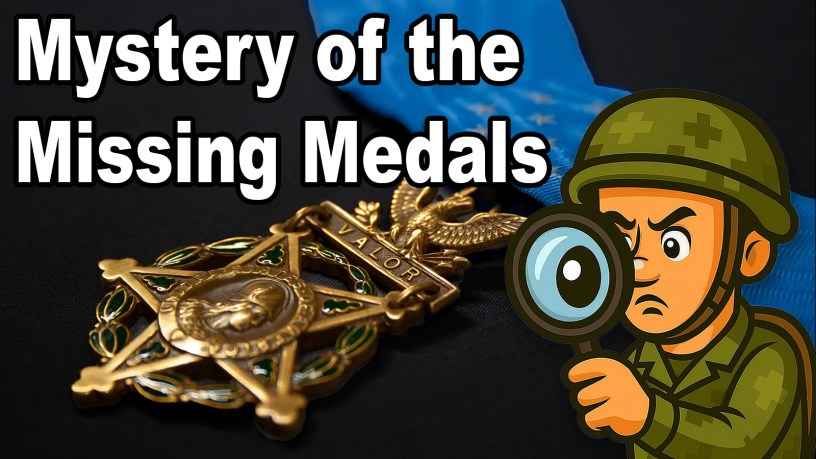
The Congressional Medal of Honor is our nation’s highest medal for valor. It’s a symbol of recognition for military personnel who demonstrate extraordinary bravery and selflessness in combat. But that wasn’t always the case. Today, we’re diving into one of the strangest chapters in American military history—it’s a story of war, and bureaucracy, and how nearly 900 soldiers lost their Medals of Honor.
The story begins in the state of Maine during the Civil War and ends with a mystery that still lingers today. This is the story of the 27th Maine Infantry Regiment—and how they earned, then lost, the nation’s highest military medal.
In 1862, the 27th Maine Infantry Regiment was mustered for a nine-month tour of duty. Led by Colonel Mark F. Wentworth, the unit was deployed to the Washington D.C. area, tasked with defending the capital during a critical phase of the Civil War.
As their enlistment neared its end in June 1863, the Union Army faced a dire threat: Confederate General Robert E. Lee was marching toward Gettysburg. With most Union forces heading north, Washington was left vulnerable. President Lincoln and Secretary of War Edwin Stanton made a desperate appeal—asking the 27th Maine to stay just a little longer.
But the 27th wasn’t the first unit Stanton asked to stay behind; he’d originally asked the 25th Maine Infantry Regiment, but when they declined, he and Lincoln opted to make the offer more enticing by guaranteeing a Medal of Honor to any soldier from the 27th who opted to extend their enlistment.
Of the nearly 900 Soldiers of the 27th, about 300 accepted the offer, staying behind for an additional four days. After Lee’s defeat at Gettysburg, these soldiers returned to Maine and the unit was mustered out of service on July 17, 1863.
But this is where things get a little messy. The Army failed to keep an accurate list of who from the 27th stayed and who didn’t. Because of this, thanks to a clerical error, the Army awarded Medals of Honor to all 864 soldiers in the regiment.
Thus, the S-1 was born … not really, but this paperwork SNAFU was just the beginning of the problem. The Department of War shipped all 864 medals to Colonel Wentworth’s home, making it his problem to distribute them to all his soldiers … soldiers who had already mustered out of the military and returned to their lives all around the country.
Wentworth did his best, but hundreds of these medals went unclaimed. According to legend, if you will, Wentworth stored most of these wayward medals in his shed and, after his death in 1897, they vanished.
According to historian Steve Dow, some of the medals were buried in concrete, others were tucked away in boxes, and a few may have been taken by veterans during reunions. Today, many are believed to be in private collections—but the exact number remains unknown.
And if you thought Soldiers not receiving their Medals of Honor was the biggest problem, you’d be wrong.
Fast forward to 1891. The War Department released a Medal of Honor roll call, highlighting the names of all the medal’s recipients and a former officer of the 27th Maine named Henry Brown Osgood noticed his name was absent from the publication. He contacted the War Department and that set off a cascading series of events that would change how the country issued its most prestigious military medal.
The culmination of that series of events was a full audit of every Medal of Honor ever issued. From that audit, Congress ordered that a total of 911 medals be rescinded. Not downgraded. Just … gone.
Of those 911 medals, all 864 given to the 27th Maine were no longer valid. Other notable figures to have their medals revoked included Buffalo Bill Cody and Dr. Mary Walker, the only woman to ever receive the Medal of Honor. During a later appeal, Cody and Walker would have their medals reinstated, but the 27th wasn’t so lucky.
Despite the purge, there was very little public outcry. Newspaper accounts from the regiment’s reunions between 1916 and 1918 made no mention of the rescinded medals. Perhaps it was a topic best left untouched—especially since most of the soldiers hadn’t volunteered to stay. Or maybe there was just a general consensus that working four extra days wasn’t really worth something so prestigious.
Either way, the mystery of the 27th Maine’s Medals of Honor isn’t about whether or not they deserved it, it’s more about … where are they now? According to the 1966 book, A Shower of Stars, by John Pullen, some witnesses claim they were located in two different locations near the Wentworth property. The majority of them, according to this claim, were mixed with concrete and buried, but no one has ever been able to find the alleged cache.
But these medals do, occasionally, appear. One medal, engraved to Philip Banfield of Company E, for example, was found washed up on a beach in Wells, Maine. Others have turned up in private collections. But the majority of them are lost.
Will they ever turn up? Probably not. As far as I can tell from my research, there isn’t an active search for any of them. But, despite that, this story, like so many other historical mysteries, continues to be a tale that intrigues both historians and collectors alike.
So what does this story tell us? That even the highest honors can be tangled in red tape. That valor isn’t always easy to define. And that history—especially military history—is full of surprises.
 That PAO Guy