
By 1st Lt. Cody Hamilton, 205th Theater Public Affairs Support Element
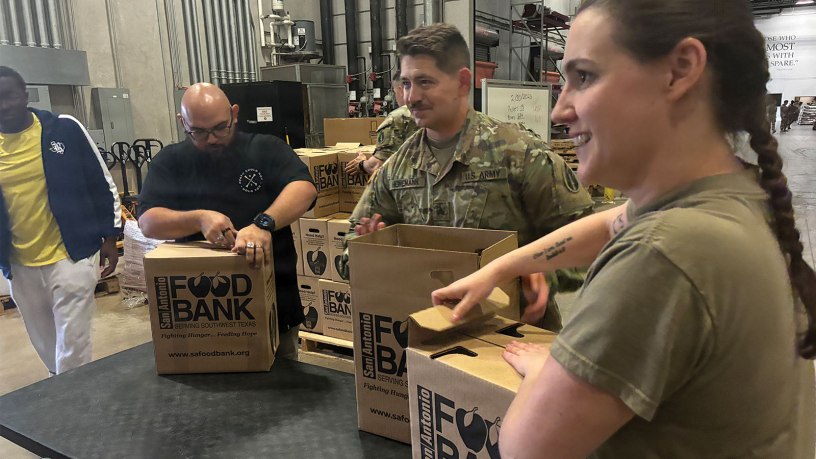
Soldiers from the 205th Theater Public Affairs Support Element, U.S. Army Reserve, spent three hours volunteering at the San Antonio Food Bank, packaging tens of thousands of meals to support families facing food insecurity across Texas on Friday, Feb. 20, 2026.
The unit and citizen volunteers of San Antonio packaged 37,376 meals, more than 25 pallets of food donations, for distribution across 29 counties throughout the state. Each box contains essential meal items and ingredients for individuals and families in need.
Nikki Worlds, Hospitality Philanthropy Manager for the food bank’s fundraising team, said the organization’s operations extend far beyond basic food distribution.
“Day to day at the San Antonio Food Bank, there is a lot happening and a lot of people that are being served.”
Community engagement remains a priority for Army Reserve units, reinforcing civilian-military relationships fostering leadership development, and strengthening unit cohesion.
Soldiers signed in and immediately joined volunteers assembling donation boxes, their work efforts almost doubling production speed.
“In the United States Army Reserve, we focus on what matters, what truly moves the needle for our families, our communities and our country,” said U.S. Army Reserve Staff Sergeant David Barrette, who organized the volunteer effort. “What matters? Using your finite resources meaningfully.”
The San Antonio Food Bank serves more than 100,000 individuals and families while operating with fewer than 300 employees, creating an ongoing need for volunteers. The organization is open six days a week to support warehouse and distribution operations.
“Selfless service is the bedrock of what it means to be a Soldier — and that’s especially true as citizen-soldiers,” Barrette said. “We serve overseas when called, and we serve at home because it’s who we are.”
According to statewide hunger relief organizations, millions of Texans experience food insecurity each year, including a substantial number of children. Rising food costs and economic pressures have increased demand at food banks and community distribution centers, underscoring the importance of volunteer-driven missions.
Worlds emphasized the impact of military volunteers on both operations and community morale.
“We love our military family, our military volunteers,” she said. “Seeing them here shows the community that this is a community organization.”
By the end of the shift, the 205th’s team had nearly doubled the previous day’s output of 13 pallets, demonstrating the combined impact of uniformed service members and civilian volunteers working together.
For the soldiers of the 205th, the mission extended beyond packaging meals. It reinforced their commitment to service — both in uniform and within the communities they call home.
 That PAO Guy