
By Capt. Katherine Sibilla, U.S. Army Southern European Task Force, Africa
BIZERTE, Tunisia — When most people think of forensics, they picture crime scenes, fingerprints, bloodstain patterns and investigators working to solve crimes after they happen.
What is not often considered is how forensic analysis can help stop threats before they ever reach the United States.
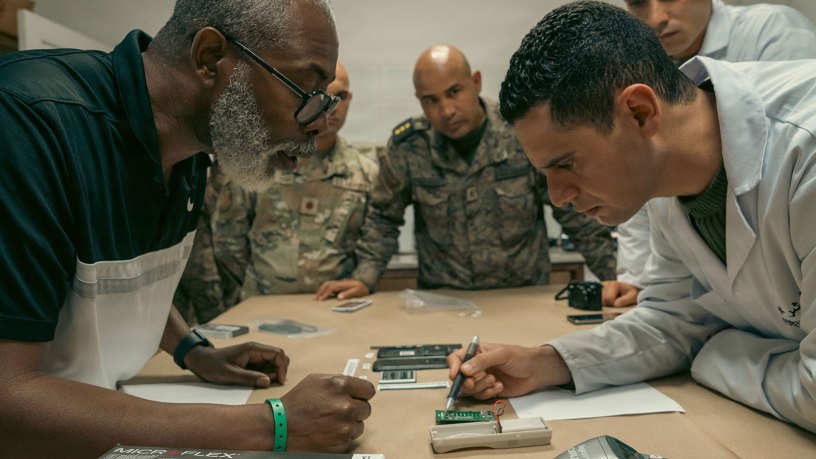
During exercise African Lion 2026, forensic experts assigned to the Joint Theater Forensics Analysis Center (JTFAC) worked alongside Tunisian Armed Forces to identify patterns, share intelligence and prevent threats from reaching U.S. borders.
“We protect our homefront by making sure the bad guys don’t come to the U.S.,” said Greg Sanson, the JTFAC liaison officer to U.S. Army Southern European Task Force, Africa (SETAF-AF).
Throughout the exercise, JTFAC and the Forensics Exploitation Directorate (FXD), part of the U.S. Army Criminal Investigation Division, collaborated with Tunisian partners, sharing forensic techniques and building lasting relationships. The exchange of knowledge ensures both forces operate with a shared understanding while strengthening long-term cooperation.
By building those partnerships, U.S. forces gain trusted allies who help identify and track threats early. When forensic data is collected – whether fingerprints, DNA or digital information – it is entered into databases and shared across networks. This process allows individuals identified overseas to be flagged before they ever attempt to enter the United States.
“When we put somebody on a watch list, it goes to the Department of Homeland Security,” said Sanson.
Forensic teams also play a critical role in understanding transnational threat networks.
Trafficking people, weapons and drugs often spans multiple regions, making pattern recognition essential. By identifying how individuals and networks operate across borders, analysts can disrupt threats before they spread to Europe or the United States.
In addition to fingerprints and ballistics, modern forensic teams analyze emerging technologies such as unmanned aerial systems. The way devices are built can often reveal unique identifiers tied to specific individuals or groups. This allows analysts and investigators to track where the material originated.
“Just by how something is built, you can often tell who made it,” said Amanda Atkins, an FXD forensic scientist.
Sharing that information with partner nations allows threats to be identified earlier and addressed collectively. The collaboration also helps Tunisia strengthen its own forensic capabilities, contributing to long-term, partner-led regional security.
African Lion also provides an opportunity for U.S. personnel to test their readiness. Teams train to rapidly deploy, integrate into partner nation laboratories and operate in unfamiliar environments, ensuring they are prepared to respond wherever needed.
For some JTFAC members, their Camp Lemonnier, Djibouti assignment is the latest in a long line of deployments to overseas-based forensic labs. Although exploitable material is exchanged among allies and partners throughout the year, African Lion gives the lab an opportunity to work side‑by‑side with those partners to compare and refine best practices.
As threats continue to evolve, forensic analysis remains a critical tool not only for solving crimes but also for preventing them. Through exercises like African Lion, U.S. and Tunisian forces work together to ensure threats identified overseas never reach American soil.
 That PAO Guy