
By 1st Lt. Bailey Breving, Veterans Health Administration
“Staying active helps get you out of your headspace and out of your homes,” Pinnock said. “That’s how I started pushing myself to get out – it made a difference.”
For U.S. Army Veteran Suzette Pinnock, attending the 40th anniversary of the National Disabled Veterans Winter Sports Clinic is more than just a new experience, it’s a powerful reflection of how far she’s come.
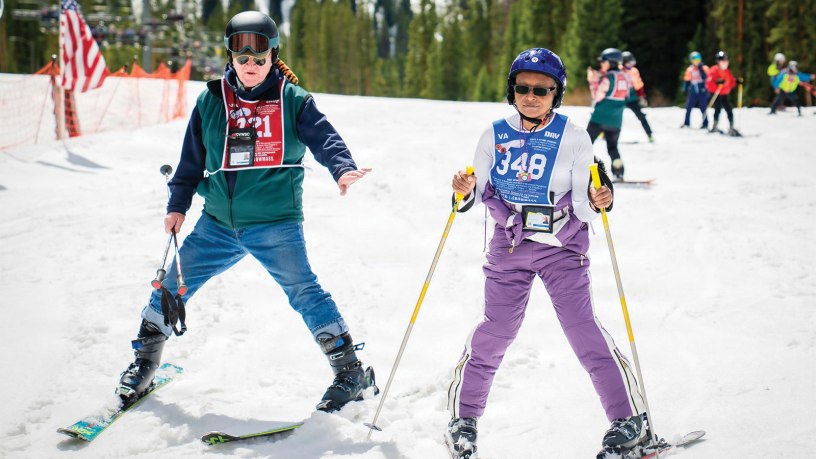
The Maryland native, who receives care through the Washington D.C. VA Medical Center, arrived at the clinic eager to try curling for the first time, however it was the slopes that made a lasting impression.
“I’ve only been on skis one other time before this,” Pinnock said. “But this week, I got out there, and I did it.”
Skiing alongside two volunteer instructors, Pinnock completed multiple runs while managing ongoing physical challenges, a milestone that carried significant meaning.
“I’m amazed that I can do it,” Pinnock said. “I’m proud of myself. And if I can do it, anybody else can do it.”
Her success on the mountain didn’t happen overnight.
Pinnock described a difficult chapter in her life when she was at her lowest, struggling both physically and emotionally. It wasan invitation to participate in adaptive sports that shifted her trajectory and she found not just an activity, but a direction.
Pinnock first learned about the Winter Sports Clinic through her local VA adaptive sports program, a resource she credits with opening doors to new opportunities.
An active member of DAV (Disabled American Veteran), she participated in a DAV golf program last year in Iowa, an experience she hopes to repeat this year.
“These programs really do help,” she said. “They give you a chance to try things, to connect, and to keep moving forward.”
At the Winter Sports Clinic, that sense of connection has come full circle. Traveling with a group of fellow Veterans from Washington, D.C., Pinnock quickly found herself reconnecting with familiar faces from past events.
“I didn’t expect to see so many people I already knew,” she said. “It was really comforting just seeing people from other programs and realizing you’re part of something bigger.”
Pinnock remains focused on growth and encouragement, for herself and others.
As a Gulf War Veteran, her message to fellow Veterans is simple but direct: “Reach out. There are resources out there, whether it’s through the VA or organizations like DAV. You have to be proactive and take care of yourself.”
Of the 319 Veterans attending this year’s clinic, just 69 are women and only 58 served during the Gulf War era, underscoring Pinnock’s message that more Veterans should take that first effort to get out and get connected.

