
By Tiziana Consoli, Naval Medical Research Command
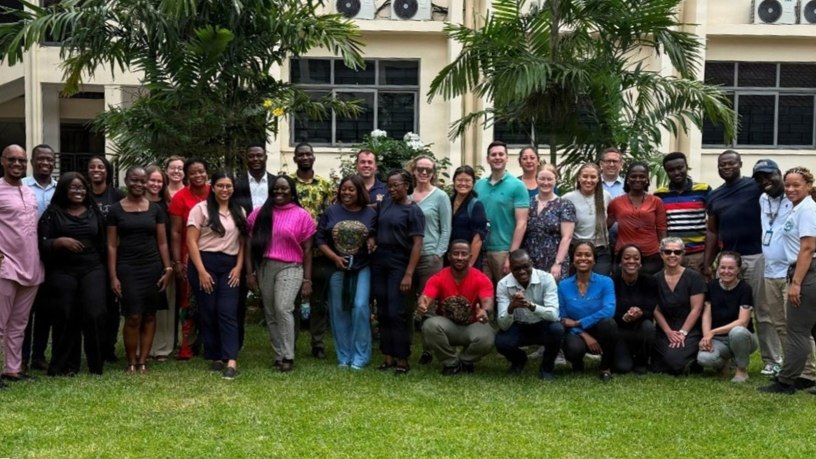
ACCRA, Ghana – 16 military medical professionals completed a two-week 2026 Military Tropical Medicine (MTM) program in Ghana on August 14, gaining firsthand experience with tropical medicine and infectious disease challenges that threaten the operational readiness of U.S. forces.
Supported by U.S. Naval Medical Research Unit (NAMRU) EURAFCENT and its Ghanaian partners, the program brought participants to military, civilian, research and public health institutions across Accra and Kumasi.
The field mission combined classroom instruction with hands-on exposure to healthcare delivery, disease surveillance, laboratory research and public health operations in a tropical environment. Participants engaged with military and civilian healthcare professionals, researchers and public health experts to better understand conditions that can influence mission success and service member health.
“The 2026 MTM Field Mission was a successful continuation of a program that has evolved significantly over the past decade,” said Lt. Cmdr. Adekunle Ogunyemi, Ghana detachment director for NAMRU EURAFCENT. “With expanded clinical sites, a broader multidisciplinary team, new institutional partnerships and a continued emphasis on specialty-based learning, the mission strengthened international medical partnerships while preparing Navy Medicine personnel to provide effective care wherever they are called to serve.”
Students visited several key medical institutions critical to Ghana’s healthcare and research landscape, including 37 Military Hospital, Korle Bu Teaching Hospital, the University of Ghana Medical Centre, the Noguchi Memorial Institute for Medical Research, Komfo Anokye Teaching Hospital and the Kumasi Centre for Collaborative Research.
The engagement provided direct exposure to medical and public health systems operating in a region where tropical diseases and emerging infectious threats remain significant concerns. By training in a region where tropical diseases and emerging infectious threats are regularly encountered, participants observed how clinicians, researchers, laboratory professionals and public health specialists work together to identify, monitor and respond to diseases that can impact military operations.
“Working alongside clinical teams in Ghana reinforced for me that supporting warfighter health begins long before a service member becomes a patient,” said Lt. Anieka Chevallier, an outpatient nurse and an MTM participant. “Operational medicine requires us to anticipate threats, understand the environment, recognize disease patterns and prepare our personnel to remain healthy and mission-ready.”
In addition to visiting Ghanaian hospitals and research institutions, students engaged with U.S. Embassy health partners and Department of War organizations, gaining additional perspective on regional healthcare delivery and disease response capabilities.
The mission was made possible through collaboration among U.S. military organizations, Ghanaian healthcare institutions, research centers and public health partners, creating opportunities for professional development, knowledge exchange and mutual learning.
“A key strength of the 2026 mission was that, rather than following a traditional observational tour, participants were matched with clinical teams according to their specialties,” Ogunyemi explained. “The experience reinforced the importance of adaptability, clinical judgment, resourcefulness and teamwork skills that are essential for military medical professionals operating in challenging environments.”
Held annually, the Military Tropical Medicine field mission complements academic instruction with experience in regions where tropical health challenges are encountered firsthand, helping prepare military medical professionals to support force health protection and readiness in diverse operating environments.
NAMRU EURAFCENT, part of Navy Medicine Research & Development, conducts research, surveillance and studies of vaccines, therapeutic agents, diagnostic assays and vector control measures in the EUCOM, AFRICOM and CENTCOM Areas of Responsibility to better prevent and treat infectious diseases in support of Navy, Marine Corps and joint U.S. warfighter health, readiness and lethality.
Navy Medicine’s 44,000+ talented and ready forces optimize health readiness, deliver quality healthcare, and provide global expeditionary medical support to warfighters.
 That PAO Guy