
By Correy Mathews, 11th Airborne Division
SAPPORO, Japan — Members of the 11th Airborne Division surgeon cell and Australian Army medical personnel visited JSDF Hospital Sapporo for a trilateral medical engagement with Japanese counterparts. The visit included a key leader engagement and technical capability survey. Medical professionals discussed hospital capabilities, casualty evacuation procedures, patient movement and the processes required to coordinate care between allied forces.
Although the visit was not part of Exercise Yama Sakura 91, the exercise brought U.S., Japanese and Australian personnel together in Japan. That presence created an opportunity for medical professionals from all three nations to meet face to face, exchange information and build relationships that extend beyond the exercise. During the engagement, the teams achieved shared understanding of JSDF Sapporo Hospital’s capabilities as a Role 3 medical facility capable of providing advanced trauma care, surgery and other specialized treatment. Understanding those capabilities gives medical planners a clearer picture of the resources available to support U.S. and allied forces operating in the region.
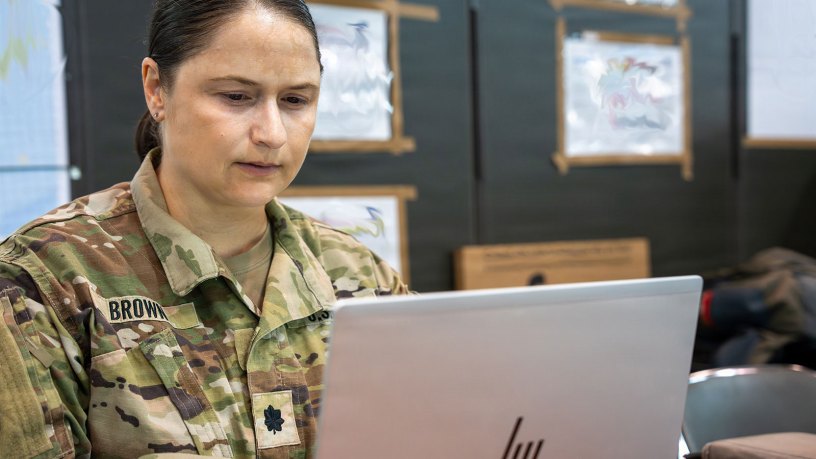
“In a combined fight, medical support cannot operate in separate lanes,” said Lt. Col. Jennie Brown, the 11th Airborne Division surgeon. “We have to understand how our partners move casualties, provide advanced care and transition patients between systems. This engagement helped us identify those connections now so we can move faster and provide the right care when it matters.”
The teams also examined how patients could move between national medical systems. Within the exercise scenario, the Division Surgeon Cell worked directly with the real world hospital to model critical integration and evacuation pathways. Planners mapped out the exact processes required to MEDEVAC and CASEVAC patients from tactical U.S. Role 2 medical facilities directly to the JSDF Sapporo Hospital. Working through this realistic scenario allowed the teams to evaluate the coordination, communication channels, and handover protocols required to transition injured personnel seamlessly from frontline U.S. care to Japanese medical custody.
Differences in evacuation procedures, communication requirements and patient transfer processes can create friction during combined operations if they are not understood beforehand. Discussing those differences in person allowed the medical professionals to identify potential challenges and establish a better understanding of how each nation approaches casualty care. That shared understanding can help medical staff coordinate more effectively during future training, operations or contingencies.
Medical interoperability is an important part of maintaining combat power. Moving an injured service member from the point of injury to increasingly advanced levels of care requires coordination across units, transportation platforms, medical facilities and, during multinational operations, national systems. Engagements like the visit to JSDF Sapporo Hospital help build that network before it is needed. By understanding allied capabilities and developing relationships between medical professionals, the U.S., Japan and Australia strengthen their ability to care for their forces while operating together across the Pacific.
 That PAO Guy