
By Staff Sgt. Matthew Wisher, 353rd Special Operations Wing
CHIANG MAI, Thailand — Patrolling the dense jungles and rugged mountains along Thailand’s borders, Border Patrol Police (BPP) officers face severe conditions where survival hinges on immediate trauma response. To meet this challenge, U.S. Special Operations Forces and Thai BPP conducted a week-long Tactical Emergency Casualty Care (TECC) exchange in Chiang Mai, Thailand, Aug. 24-30, 2026.
The week-long training pipeline began with Tactical Combat Casualty Care (TCCC) fundamentals, drilling BPP participants on precise techniques required to sustain life in high-threat environments.
The classroom instruction quickly gave way to high-stress, real-world simulations. The instructors challenged participants with complex casualty simulations that demanded mastery of high-angle rope work, including rapid rappelling from urban structures and steep jungle cliffs.
“This partnership builds vital readiness, ensuring our combined forces can stabilize casualties and give them a chance to survive when it matters most,” said Police Sgt. Maj. Yu James, a Thai Border Patrol squad leader.
Once the BPP demonstrated critical safety checklists and anchor-point verification, the curriculum shifted to complex vertical rescue operations. Instructors introduced advanced belay systems, forcing students to negotiate sheer drops to reach simulated patients trapped on isolated ledges.
“Trusting your equipment is one thing, but trusting the teammate holding your safety line while dangling over a cliff requires absolute synchronization,” noted a U.S. Special Operations team leader. “These drills forge an instant, unbreakable reliance on one another.”
After earning a final stamp of approval from the U.S. SOF subject matter experts, the BPP students faced a grueling, multi-scenario evaluation.
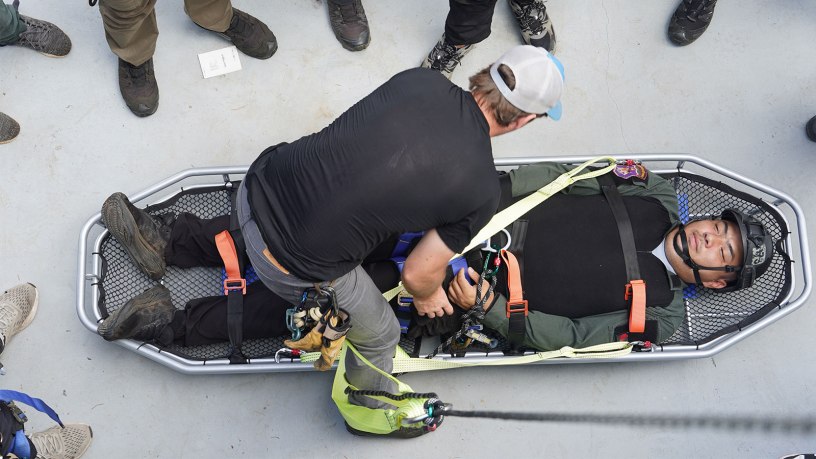
The final crucible forced operators to synthesize their trauma medicine skills with high-angle rope mechanics. Under simulated duress, teams successfully packaged critically wounded patients into litters, rigged mechanical advantage systems, and executed vertical evacuations from high-angle terrain.
The graduation ceremony concluded with the presentation of official TECC certifications, but organizers emphasized that the true measure of success was interoperability. Beyond the new tactical skills acquired, the joint exercise solidified a deeper operational bond between the Thai border guards and the U.S. forces standing ready to deploy whenever disaster strikes the region.

